
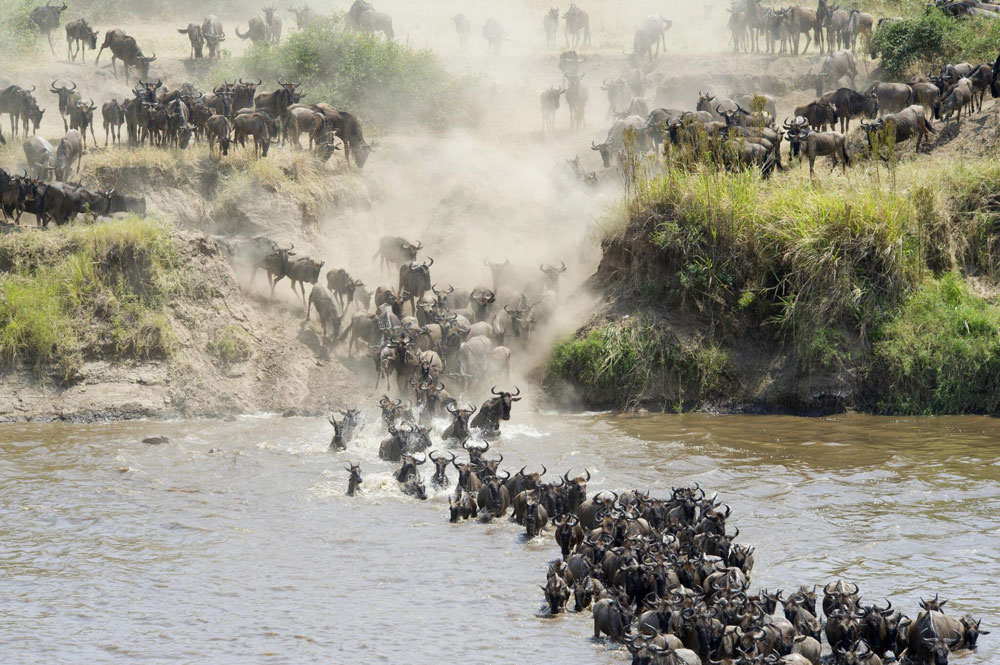
Great Migration in Tanzania: When and Where to See It
Follow the seasonal movement of wildebeest and zebra through the Serengeti and discover which areas of Tanzania are most rewarding at different times of the year.
The Great Migration is not a single event or one fixed season. Wildebeest and zebra move continuously through the Serengeti ecosystem in response to rainfall, grazing and changing conditions. The best place to stay therefore depends largely on when you plan to travel.
For travellers planning a Tanzania safari, understanding this seasonal cycle helps determine which part of the Serengeti and northern safari circuit should receive the most time in the itinerary.
When Is the Best Time to See the Great Migration?
There is migration activity throughout much of the year, but the character of the experience changes from one season to another.
–
March
Southern Serengeti & Ndutu
The southern plains are commonly associated with large herds and the calving period. Green landscapes, young animals and predator activity can make this a rewarding season.
Best For: Calving • Predators • Photography–
May
Herds Begin Moving North
As conditions change, herds gradually move away from the southern plains. This is also a wetter period, with greener scenery and generally fewer visitors.
Best For: Green Season • Flexible Safaris–
July
Western & Central Serengeti
Migration activity increasingly shifts through western and central parts of the ecosystem while resident wildlife and big cats remain an important part of the safari.
Best For: Migration • Predators • Wildlife–
October
Northern Serengeti & Mara River
Northern Serengeti becomes especially important as herds move through the wider Mara River region. River crossings may occur during this period, but timing is completely unpredictable.
Best For: Northern Serengeti • Migration • Mara River–
December
The Journey South
As seasonal rains return, herds gradually begin moving south again. Changing landscapes and fewer visitors can make this transition period particularly interesting.
Best For: Changing Landscapes • Wildlife • Photography
Can You Guarantee a Mara River Crossing?
No. Mara River crossings are among the most dramatic migration events, but they cannot be scheduled. Herds may gather near the river and wait for hours or several days, change direction or cross at a completely different location.
No safari operator can guarantee an exact herd location or river crossing on a particular day. A good migration itinerary improves your opportunities by positioning you in the right region for the season and allowing enough time for changing wildlife activity.
How Many Days Should You Spend in Serengeti?
Migration-focused safaris benefit from spending several nights in the Serengeti. More time gives your guide greater flexibility to respond to herd movements and recent wildlife reports.
Suitable for a shorter classic safari, but provides limited flexibility for migration tracking.
Better for migration-focused travel, photography and exploring more than one productive wildlife area.
The Migration Is More Than River Crossings
The wider migration experience can include immense wildebeest and zebra herds, predator activity, calving, changing landscapes and some of Tanzania's best wildlife photography.
For many travellers, the strongest safari combines migration activity with the Serengeti's resident wildlife rather than focusing on one specific event.
Planning Your Tanzania Migration Safari
Start by choosing your travel period, then build the Serengeti portion around the area most suitable for that season. Longer migration journeys can also combine naturally with Ngorongoro and other northern Tanzania destinations.
Explore our Tanzania safari tours, compare Tanzania safari destinations, or read our complete Tanzania Wildlife Safari Guide before planning your journey.
Ready to Plan Your Serengeti Migration Safari?
Share your travel dates, group size and safari style. We'll help position your Serengeti stay around the seasonal migration pattern and combine it with the right Tanzania destinations.